Why Wet Hair Is More Vulnerable and How the Right Hair Brush Helps
Wet hair might look glossy and healthy, but it’s actually at its most fragile state. The moments after washing are when hair is most prone to stretching, snapping, and breakage – especially if you’re using the wrong tools or techniques. Understanding what happens to hair when it’s wet, and choosing the right hair brush, can make a big difference to the health, strength, and appearance of your hair over time.

Why Wet Hair Is More Vulnerable
When hair is dry, its structure is compact and strong. When it becomes wet, the hair shaft absorbs water and swells, lifting the cuticle and changing the hair’s internal structure. This makes hair more elastic, meaning it can stretch further than normal and the hair fibre becomes structurally weaker and more vulnerable to damage.
Wet hair is softer and far less resistant to tension, which makes it much more likely to snap under pressure. Even gentle pulling, rough towel drying, or brushing can place stress on fragile strands, causing tiny fractures in the hair fibre. Over time, these micro-breakages build up, leading to frizz, thinning ends, split ends, and overall weakened hair health.
What Happens to Hair When It Is Wet
When hair comes into contact with water, it doesn’t just get wet on the surface – the water penetrates deep into the hair shaft and changes the hair’s structure from the inside out. This affects how strong, flexible, and resilient each strand is, altering the way hair responds to tension, movement, and brushing. As a result, hair becomes more vulnerable to stretching and stress, making everyday actions far more likely to cause damage.
When water enters the hair shaft:
- The cuticle layer lifts slightly
- The inner structure of the hair expands
- The hair fibre becomes heavier with water
- Elasticity increases, but strength decreases
This combination makes hair more flexible but structurally weaker, meaning it’s easier to overstretch and break – especially during detangling.
Why Brushing Wet Hair Can Cause Breakage
Brushing wet hair with the wrong brush or technique places direct tension on strands that are already weakened by water absorption. Because wet hair is softer and more elastic, it stretches more easily under pressure, but that stretch often results in damage rather than flexibility.
Tugging through knots, pulling at the roots, or forcing a brush through tangles puts stress on the hair, weakening the structure of the hair over time. Traditional hard-bristle brushes and fine-tooth combs can catch on knots, create uneven tension, and cause snapping at weak points, which gradually leads to split ends, frizz, thinning ends, flyaways, and visible breakage.

How the Right Hair Brush Helps Protect Wet Hair
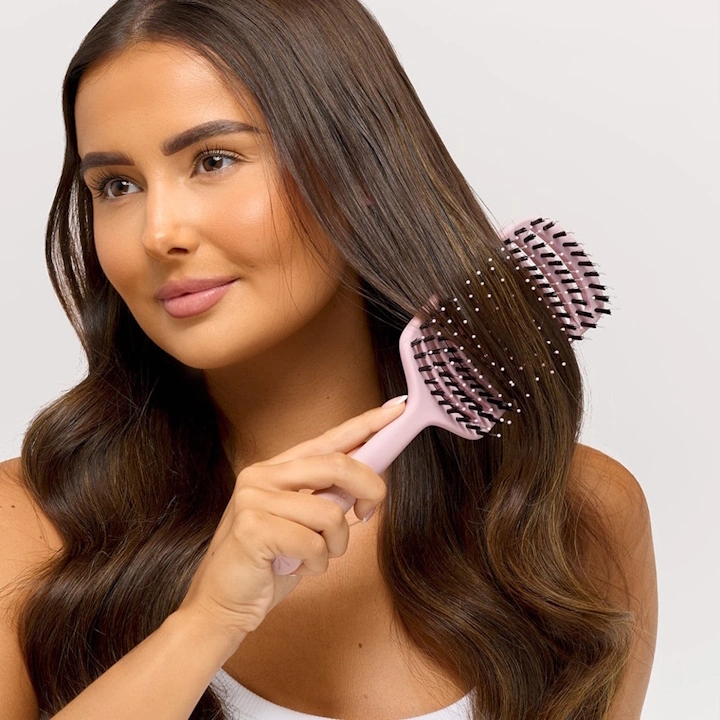
The right hair brush is specifically designed to work with fragile, wet strands rather than against them. Unlike traditional brushes that can snag and pull, a quality wet-hair brush glides smoothly through tangles, reducing tension on the hair shaft and distributing pressure evenly along each strand. Its flexible bristles allow the brush to move with the natural movement of the hair, gently easing out knots without forcing or tugging. This careful design helps to minimise breakage, prevent stress on the follicles, and protect the overall health of the hair, making detangling a gentler, more effective process for all hair types.
What to Look for in a Hair Brush for Wet Hair
Not all brushes are created equal, especially when it comes to wet hair. Choosing the right brush can make a big difference in reducing breakage and making detangling a smoother process. A good wet-hair brush is designed to glide through tangles rather than pull on fragile strands, while providing enough flexibility and control to handle knots without causing stress or damage.
When choosing a brush for wet hair, look for:
- Flexible tips – without ball-tips so the brush glides through smoothly
- Spaced out bristles – unlike a dense bristle brush as these brushes are for dry hair only
- Lightweight design – for better control and less pressure
- Ventilation – helps with airflow if you’re blow-drying after detangling
These features work together to protect each strand while still making detangling quick, easy, and comfortable, helping to preserve the overall health and strength of your hair.
When to Detangle Wet Hair in Your Routine
Timing and technique are just as important as the brush you choose. Detangling without the right preparation can put unnecessary stress on your hair, leading to breakage, frizz, and split ends. The ideal approach is to work with hair that is damp and has some slip from conditioner or a detangling product, which allows knots to be eased out gently without tugging.
The best time to detangle wet hair is:
- After applying conditioner in the shower
- After using a leave-in conditioner or detangling spray
- When hair is damp, not dripping wet
Using products that add slip reduces friction between strands, making knots easier to release without damage.

Is a Wet Hair Brush Suitable for All Hair Types?
Wet hair brushes can be suitable for all hair types, but the way you use them should adapt to your hair’s texture and needs. Different hair types have different levels of strength, elasticity, and tangling, so technique is just as important as the brush itself. Using the right method helps prevent unnecessary breakage, protects the hair shaft, and makes detangling more effective and comfortable.
- Fine hair: Use ultra-gentle pressure and use a brush with flexible bristles
- Curly hair: Detangle with product in, using a flexible brush or a wet brush specifically designed for curly hair, such as the Curly Hair Detangling Brush
- Thick hair: Work in sections to avoid pulling
- Straight hair: Start from the ends and work upwards
The brush type and method should always match your hair texture to ensure safe, stress-free detangling.
Simple Tips to Reduce Damage After Washing
Caring for your hair after washing doesn’t have to be complicated, but small changes in your routine can make a big difference in preventing breakage and maintaining healthy strands. Gentle handling, the right tools, and protective products all work together to reduce stress on wet hair. By adopting a few mindful habits, you can protect your hair from damage, minimise frizz, and keep it looking its best.
- Use a microfiber towel to dry hair gently
- Apply a leave-in conditioner or detangler
- Detangle from ends to roots
- Use a brush designed for wet hair
- Work in sections
- Avoid rushing – slow detangling prevents breakage
- Let hair air-dry partially before heat styling
Following these tips consistently helps maintain hair health, making it easier to manage, style, and enjoy stronger, shinier strands over time.
Wet hair care is one of the most overlooked parts of a healthy hair routine. By understanding why wet hair is more vulnerable – and choosing the right hair brush – you can protect your strands, reduce breakage, and keep your hair looking smoother, stronger, and healthier after every wash.
Protecting your hair starts the moment it’s wet, and choosing the right tools and techniques makes all the difference. Take control of your haircare routine today by investing in a quality wet-hair brush, practicing gentle detangling, and following simple post-wash tips to reduce damage. Your hair deserves care that keeps it strong, smooth, and healthy – start treating it right and see the difference every day. Explore our full range of brushes and haircare tools to make every wash a step toward healthier hair.
FAQ
1. Can brushing wet hair cause permanent damage?
Brushing wet hair improperly can lead to breakage, split ends, and thinning over time. Using a brush designed for wet hair and detangling gently can help prevent long-term damage.
2. Should I brush my hair while it’s dripping wet?
It’s best to detangle hair when it’s damp, not soaking wet. Hair that is dripping wet is at its weakest and more prone to snapping.
3. Are wet hair brushes suitable for all hair types?
Yes, but technique matters. Fine hair needs gentle pressure, curly hair benefits from detangling with product, thick hair should be detangled in sections, and straight hair should be brushed from ends to roots.
4. How often should I detangle wet hair?
Ideally, detangle your hair after every wash while it’s damp and conditioned. For very curly or textured hair, detangling in sections can make the process easier and less damaging.
5. Can using a wet hair brush reduce frizz?
Yes. Brushes designed for wet hair help smooth strands and reduce breakage, which in turn can minimise frizz and improve overall hair appearance.
6. What products should I use before brushing wet hair?
A conditioner, leave-in conditioner, or detangling spray adds slip, reduces friction, and makes knots easier to remove without pulling.
7. Can I use a regular brush on wet hair if I don’t have a wet hair brush?
It’s not recommended. Regular hard-bristle brushes or fine-tooth combs can snag and break wet hair. Use a wide-tooth comb if you don’t have any other options.
8. Is it better to detangle hair before or after drying?
Detangling when hair is damp (after washing or with leave-in products) is generally safest. Brushing completely dry hair can cause fewer breaks if done gently, but knots are easier to release when damp.