What’s the Best Brush for Wet Hair?
You may have heard people tell you not to brush your hair when it’s wet. That advice exists because wet hair is more elastic and more likely to stretch and break if it’s handled roughly. That doesn’t mean you should never brush wet hair, but it does mean the tool you use really matters.
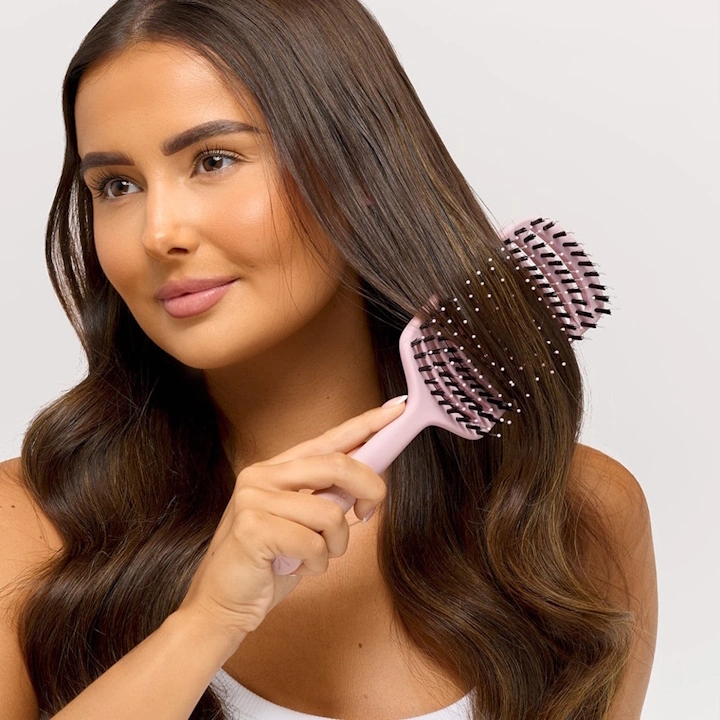
If you do need to brush your hair while it’s wet, a detangling brush with flexible bristles is usually the safest option.

Why the Right Brush Matters on Wet Hair
When hair is wet, the outer layer softens and strands are more vulnerable to damage. Firm brushes can pull at knots and put too much tension on the hair, especially around the ends and underneath longer layers. A detangling brush works differently. Its flexible bristles bend when they meet resistance, helping ease knots apart gradually rather than forcing them through.
This makes detangling brushes particularly useful straight after washing, when hair is most prone to snapping. They are also helpful for distributing conditioner or leave-in products through damp hair without dragging or tugging.

Are Other Brushes OK to Use?
Some brushes are better avoided on wet hair. Paddle brushes and brushes with stiff bristles can be too harsh, increasing the risk of breakage. Round brushes are also not ideal at this stage, as hair can wrap around the barrel and stretch more than it should.
Wide-tooth combs are a gentle alternative, especially for very curly or coily hair. They allow you to work through knots slowly and with more control. For many people, though, a flexible detangling brush strikes the best balance between being gentle and getting the job done efficiently.
How to Brush Wet Hair More Safely
Start at the ends and work your way up in small sections, rather than brushing from the roots straight away. Using conditioner or a detangling product can help the brush glide through more smoothly. Keep pressure light and take your time, as even the right brush can cause damage if used too roughly.